
External Chief Operating Officer (Fractional COO) for companies that are growing or changing and where a full-time in-house COO would still be premature.
Your business has moved forward.
Its operations need to move with it.
Because what was enough for a smaller team stops being enough as the company grows.
What worked before may not be enough for what comes next.
The company grows. More people, clients and teams come in. Or you are preparing for another branch, a new market, a management change or a sale.
As the company changes, the way it is run has to change with it. Because what got it here may not get it where it needs to go next.

How I help business owners
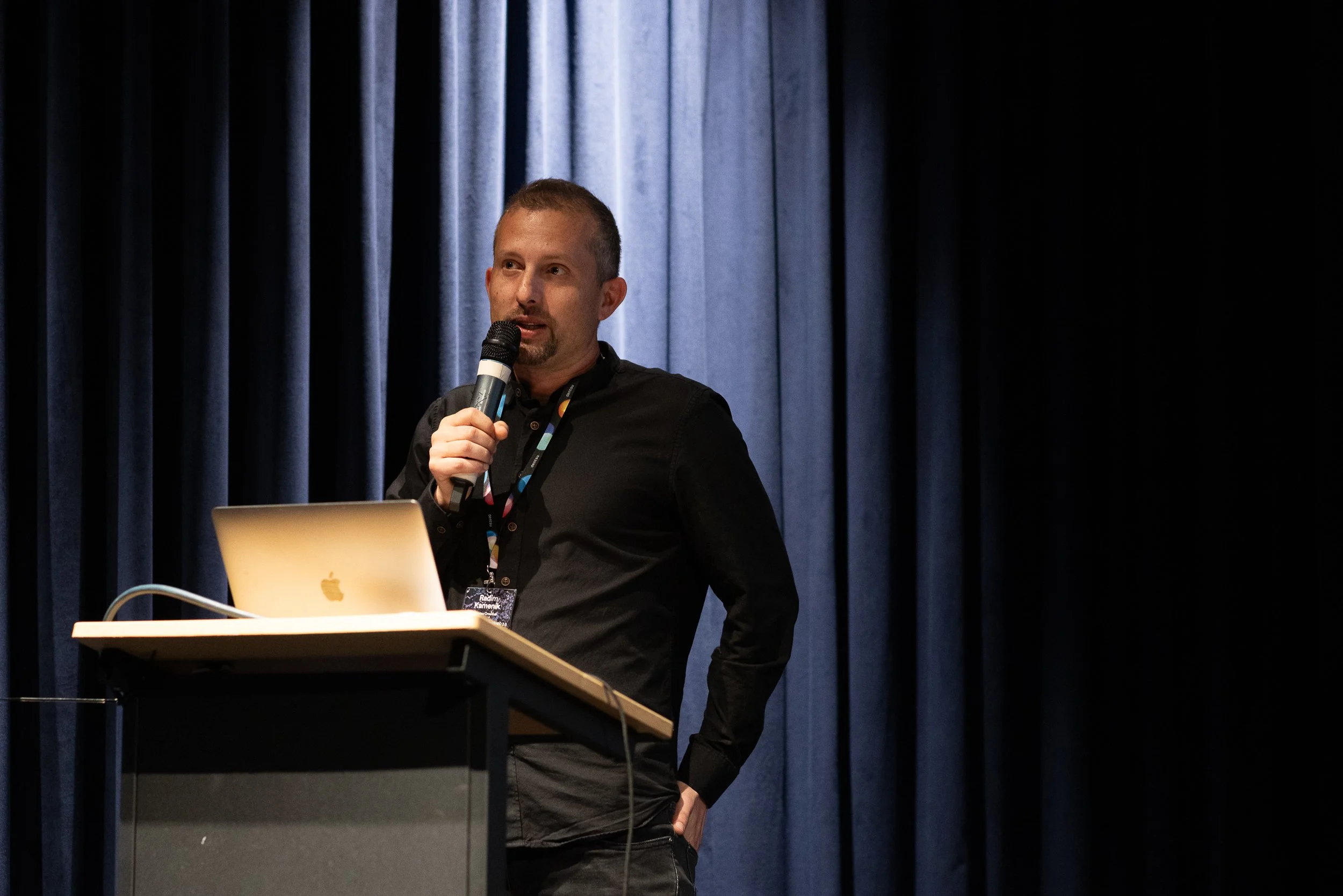
I work as an external Chief Operating Officer (Fractional COO). I help business owners when their companies have evolved to the point where their existing way of managing the business is no longer sufficient. This gives them senior operational leadership without the need to create another permanent management role.
I work directly inside the business, where decisions are made, coordination happens and operational limits become visible. In particular:
when further growth only adds more complexity
when the company keeps creating unnecessary work for itself
when management sends problems back up instead of making decisions
when the company is preparing for its next phase and the current way of operating may not be able to support it
I am not a coach or an adviser who makes recommendations and leaves. For a limited period, I become part of the company’s management and work with the team to make sure the changes actually take hold in practice.

When an external COO makes more sense than an internal one.
When the company already needs senior operational leadership, but does not yet have five days a week of work for the role.
This is typically a transitional phase: the company has grown, is preparing for further growth, another location or a management change. The owner wants to hand over part of the management responsibility, but hiring an internal COO would still be premature.
You do not hire an external COO for their presence. You hire senior judgement in the amount the business actually needs.
Once the company has a permanent COO agenda, a larger management team and enough work for the role every day, an internal COO starts to make more sense.
Tech-first operations. Human-first environment.
Technology without people scales mediocrity. People without technology fall behind.
Operations without AI, automation and the right tools are now at a structural disadvantage. That is why I try to make them part of every system I design. But technology alone is not enough.
Real performance always comes down to people — people with autonomy, room to grow and a clear sense of purpose in their work. And the stronger the team, the less control it needs.
I build ways of working where technology takes care of routine work and the environment gives people room to do their best work. Only then does technology truly help — instead of simply accelerating average performance.
How the collaboration works
After an initial assessment, we agree on the scope of the engagement. In some cases, the greatest value comes from an operational assessment and implementing a few targeted changes; in others, from ongoing involvement in managing the business, typically one to three days per week.
I work directly with the owner and key people, both on-site and remotely, depending on what makes the most sense.
I describe in more detail what the role of an external COO involves at fractionalcoo.cz.
Who am I?

I have been managing companies, teams and operations for more than 15 years. I have worked as a COO and Managing Director, and I co-founded two companies and helped build them from the ground up.
At Havas, I was part of growing the company to around 70 people. Earlier in my career, I worked in London as an EMEA Account Director, leading the Hewlett-Packard account across 48 countries, managing a team of 11 and taking responsibility for its day-to-day operation and profitability. At Dentsu, I was a member of the Czech board, led a team of more than 60 people and oversaw the development of a regional delivery hub of around 400 people across Central and Eastern Europe. At Insighters, as COO following the company’s acquisition by new owners, I helped stabilise its economics, client portfolio and operating model.
I have managed companies that needed to be built, scaled and simplified again. That is why I do not believe in universal management models. What interests me is what a particular company needs in order to handle its next phase. Today, I bring that experience to my work as an External Chief Operating Officer.

More detailed professional history can be found on my LinkedIn profile.
What my work looks like in practice
Below are three anonymised examples from real client engagements. I do not disclose company names or certain details due to confidentiality. For selected engagements, references can be provided privately upon request.
Manufacturer of POS materials for international brands
AI-driven sales system for expansion into Germany and Scandinavia
The company has its own manufacturing operations, a presence in four European countries and experience working with major international brands. The goal was to build a systematic sales operation in Germany and Scandinavia — without creating another manual sales process. From the outset, we designed it so that an AI agent would handle most of the research, outreach preparation, record-keeping and follow-ups, while people would step in primarily where judgement and final approval are required.
We started by clarifying what exactly we wanted to sell in the new markets. We divided the offering into two clear pillars — custom POSM and retail solutions, and modular sustainable display systems. We sharpened the positioning around a combination of Western European quality, Central European pricing and the ability to deliver the entire project from concept and engineering through production to logistics and installation. We then adjusted the sales presentation and the way the company introduces itself to prospective customers.
Next, we built the sales system itself. For Germany, Norway, Sweden, Finland and Denmark, we selected the beverage sector as the first target segment. The AI agent identifies relevant companies, finds and verifies contacts, classifies them according to defined rules, prepares them for the CRM and checks for duplicates or contacts that must no longer be approached.
We kept the CRM deliberately simple and built it in Google Sheets, but its day-to-day administration does not sit with a person. The AI agent continuously maintains companies, contacts, outreach status, next steps, follow-ups and communication history. The salesperson therefore does not have to manually record what happened and what should happen next after every email.
The outreach itself works in the same way. Based on the approved strategy, the agent prepares individual messages, works with information about each company, makes sure the right offer is being presented, tracks the next step and prepares follow-ups when they are due. Before anything is sent, a person reviews who is being contacted and what will actually go out. The rest of the process — research, preparation, record-keeping, control rules and subsequent actions — is handled by the agent.
The result is a sales system that does not depend on someone manually searching for companies every day, updating spreadsheets and remembering who needs to be contacted next. The AI agent keeps the process moving, while people focus their time where it has the greatest value: judgement, quality of communication and the actual sales conversation.
Product company with international e-commerce
Production, sourcing and pricing for a growing international e-commerce business
The company is run by the owner and one business partner. It sells its own automotive product internationally, and as the business grew, several areas that had previously been handled very directly and operationally needed to become more structured and easier to control.
I helped set up the production process from order to finished product — what needs to be ordered and when, who is responsible for what, and where control points need to be built in so that production does not depend solely on the owner’s ongoing supervision.
This also included setting up a more structured approach to selecting and managing Chinese suppliers. Not just based on price, but also on quality, reliability, communication, delivery terms and how quickly problems can be resolved. The goal was to make sourcing a repeatable process with clear steps and comparable criteria, rather than starting each search and negotiation from scratch.
I also helped build the pricing model so that prices were not based only on manufacturing cost, but reflected the full economic picture — shipping, customs duties, claims and returns, payment costs, operating overhead and the required margin.
The result is not “more process”. It is the ability for two people to manage a larger volume of production and sales without every additional order automatically creating more manual coordination.
Beauty studio
Website, online booking and performance marketing connected into one system managed by an AI agent
The studio originally relied mainly on customers finding its services organically, while bookings were handled inconveniently by phone or email. The goal was to simplify the entire customer journey while building a marketing setup that could be continuously measured and managed.
We started with a new website and introduced the Reservio online booking system. Customers can now choose an available appointment and book directly, without calling or waiting for a reply. We also prepared the website for SEO, GEO and AEO, connected it to Google Analytics and Google Search Console, and built paid acquisition around it through Google Ads and Meta.
Measurement was an important part of the setup. We connected the booking journey with the advertising platforms so that campaigns would not be evaluated only by clicks and traffic, but by actual bookings and their value. This also included setting up attribution as accurately as possible, so we could understand where a particular lead or booking came from and which campaigns should reasonably be credited with the associated acquisition cost.
The system also includes the production of marketing assets. The AI agent generates visuals and advertising copy for both Meta and Google Search Ads, creates new variants and continuously rotates and A/B tests them. This means the owner is not dependent on a single set of creatives running unchanged for months.
The agent also continuously monitors campaign performance. It evaluates media spend, cost per booking, booking value and differences between individual services, and adjusts budget allocation based on the results. Campaigns that perform well receive more room to grow; weaker ones are reduced or tested differently.
The result is a digital operating system in which the website, booking, measurement, production of advertising assets and campaign management work together as one whole. Customers have a simpler path to booking, while the studio has marketing that the AI agent continuously evaluates and adjusts based on real results.
Blog
2026

2026
2026
2026
2026
2026
2026
2026
2026
2026
2026
2026
2026
2026
2026
2026
2026